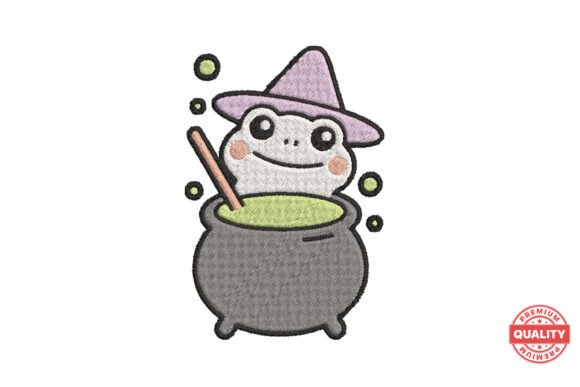
Witch Frog in Cauldron Embroidery Design Review
As an experienced embroidery designer who has spent years refining digital files for commercial production, I approach every new asset with a critical eye. When evaluating Witch Frog in Cauldron Embroidery, my primary focus is not just on the whimsical imagery but on its viability as a core component of small business merchandise and branded patches. This design is marketed for stitching on baby onesies, toddler tees, trick-or-treat bags, or Halloween decor to create a cute-but-creepy vibe. While that description paints a charming picture, the true test lies in how it translates from a digital preview to a durable, high-quality finished product on custom apparel and accessories.
First Impressions and Brand Personality
The initial visual assessment of Witch Frog in Cauldron Embroidery suggests a playful yet slightly edgy aesthetic. For a brand identity, this piece strikes a balance between professional polish and handmade charm. It feels friendly enough for a bakery or boutique but possesses a dark enough edge to appeal to creative studios, pet brands, or local businesses looking to stand out during seasonal campaigns. The "cute-but-creepy" descriptor indicates a unique niche that can drive customer engagement by offering something distinct from standard corporate logos.
In terms of visual personality, this design leans towards modern and decorative rather than classic or rustic. It is bold enough to serve as a focal point on a tote bag design or a chest logo accent, yet detailed enough to require careful execution. If your brand aims to project a premium, artisanal feel, this file could work well, provided the stitch density is managed correctly to avoid a cluttered look on smaller items like caps or apron embroidery.
Real-World Business Applications
The versatility of this machine embroidery design makes it a strong candidate for various commercial applications. Imagine a small café wanting to launch a Halloween-themed line; Witch Frog in Cauldron Embroidery could be stitched onto staff uniforms or used as a patch on service aprons. The 5 sizes mentioned, ranging from 3.8 inches to 4.8 inches, offer flexibility for different garment placements.
- Embroidered Patches: The larger sizes are ideal for creating iron-on or sew-on patches for denim jackets, backpacks, or tote bag design accents. These can serve as limited-edition merch for craft fairs or Etsy branding assets.
- Apparel Decor: On custom apparel, such as toddler tees or hoodies, the design works effectively as a sleeve detail or a central chest graphic. It adds value to handmade products without overwhelming the wearer.
- Product Packaging: Small versions can be used as embroidered labels on product packaging or gift tags, adding a tactile element that enhances customer trust and perceived value.
- Event Merch: For local events or pop-up shops, this design fits perfectly into event merch collections, allowing businesses to sell branded items that customers will actually want to wear.
When integrating this digital embroidery file into your workflow, consider how it complements other design assets. Does the color palette match your existing thread colors? Does the style align with your current catalog? Consistency is key to building a recognizable brand identity.
Critical Considerations and Potential Pitfalls
While the concept is appealing, there are specific scenarios where Witch Frog in Cauldron Embroidery requires caution. Not every surface is suitable for every design, and failing to account for fabric texture or hoop size can lead to production failures.
Small Patch Sizes and Cap Fronts: If you intend to use the smallest size (3.8 inches) for a cap front or a tiny patch, be wary of the level of detail. Curved surfaces like caps often distort fine lines. If the design includes intricate outlines or small text, it may become illegible when stitched on a curved brim. Always verify if the design retains clarity at reduced scales.
High Stitch Density and Fabric Texture: Designs with high stitch density can cause puckering on lightweight fabrics like thin cotton tees or delicate blends. If you plan to use this on textured fabric, such as fleece or heavy canvas, ensure the stabilizer choice is robust enough to support the weight of the stitches. Conversely, on smooth, slippery materials, the design might shift during the embroidery process.
Dark Uniforms and Thread Colors: The visibility of the design depends heavily on thread contrast. If your business uses dark uniforms, ensure the file includes light-colored threads or a sufficient underlay to prevent the background fabric from showing through. Without proper contrast, the "cute-but-creepy" vibe may get lost against a black apron or navy shirt.
Frequent Washing: For items like work shirts or apron embroidery that undergo frequent washing, the durability of the stitch placement is crucial. Ensure the design does not have excessive loose ends that could snag or fray over time.
Impact on Brand Identity and Customer Trust
A well-executed design elevates a product from a commodity to a branded experience. Using Witch Frog in Cauldron Embroidery effectively can signal that your small business cares about quality and attention to detail. Customers associate clean, precise embroidery with professionalism and reliability. A sloppy stitch job, however, can damage buyer engagement and erode trust.
This design offers a unique opportunity to humanize your brand. In a market saturated with generic graphics, a handcrafted touch like this embroidery file helps convey a story. Whether it is a florist adding a spooky twist to their fall collection or a pet brand launching a holiday line, the design fosters a connection with buyers who appreciate creativity and uniqueness.
Practical Designer Notes for Production
Before committing to a large production run, follow these essential steps to ensure the success of your commercial embroidery projects:
- Test in Black and White: Convert the design to grayscale first to check contrast and balance. This helps identify areas that might lose definition.
- Verify Size and Hoop Dimensions: Confirm the exact hoop size required for each of the 5 available sizes. Ensure your equipment can accommodate the dimensions, especially for the 4.8-inch version.
- Check Stitch Density: Review the stitch count per square inch. If the density is too high, it may cause fabric distortion; if too low, the design may lack body.
- Inspect Spacing and Outlines: Look closely at the spacing between elements. Tight spacing can lead to needle clashes, while wide spacing might look sparse on small items.
- Test on Real Fabric: Do not rely solely on printable mockups. Run a test sample on the actual fabric you intend to use to see how the thread interacts with the material.
- Select Proper Stabilizer: Choose a stabilizer that matches the weight and stretch of your fabric to maintain shape and prevent puckering.
- Create Client Mockups: Use a high-quality mockup to show clients how the design looks before production begins.
- Confirm Commercial Licensing: Crucially, verify that you have the rights to use this digital embroidery file for commercial purposes. Check the license terms included with the purchase to avoid legal issues.
By following these guidelines, you can transform Witch Frog in Cauldron Embroidery from a simple graphic into a powerful tool for your small business merch strategy. Whether applied to a hat, a tote, or a product label, this design has the potential to become a signature element of your brand's seasonal identity.